Reel vs. Real: Entrepreneurship Was Never Meant to Go Viral
Mindset
Startup Advice
Nowadays internet is slowly reshaping the meaning of entrepreneurship, and somehow it is becoming a trend to showcase the revenue screenshots, not the soil, not the seed, and definitely not the process that made those numbers real.
We all have witnessed a glamorous portrayal of success, especially in this social media era, where some are posting Bugatti’s and private jets with a caption about ‘the entrepreneur mindset‘; some are feeding their cat gourmet sashimi off a Versace dish, explaining how to invest in capital, with no mention of generational wealth sitting behind the camera. Somewhere between the reels and real life, we lose the true essence of entrepreneurship.
What does it really mean to be an entrepreneur now?
In this article, we explore some uncomfortable truths that reveal the gap between performance and reality. Who is really benefiting from selling us the dream? How does this affect early entrepreneurs? Finally, how to embrace the real values of an entrepreneur.
The results shine brighter than the process.
The results shine brighter than the process.
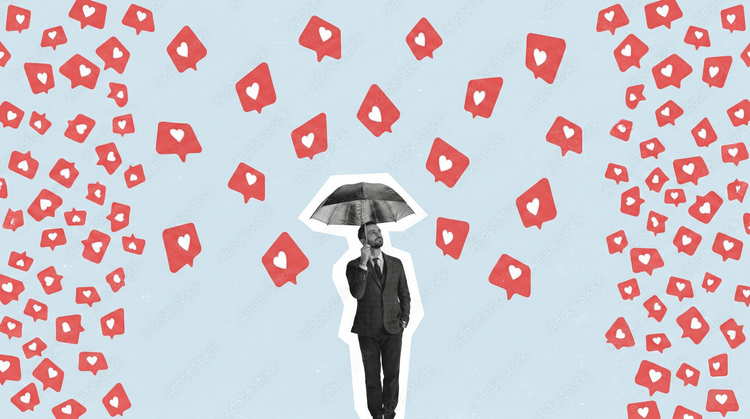
Most of the entrepreneurship content on social media platforms is the yield, not the soil, not the seed, and definitely not the daily struggles. Why? When was the last time you saw someone go viral for a rejection email? Struggles were never meant to go viral. Online algorithm rewards the portrayal of the 6 figures, the Lamborghinis, and the ‘I made it’ post, not designed to show you the broader perspective. Additionally, as human beings, it is easier to engage with the shine, rather than with the fall. The result? Constant exposure to only the results drags us into a comparison loop, dimming the clarity of the vision that led us to the result. This leads to experiencing cognitive dissonance - working hard daily while believing they should already be winning, compelling them to quit early. Failure has no aesthetics, and the uncertainty never gets a thousand-plus likes. And what exists in social media is a version of entrepreneurship that was never real to begin with.
Did we accidentally fall into this trap? Or is this pre-designed business model?
Did we accidentally fall into this trap? Or is this pre-designed business model?
Your insecurity sells, and without knowing it, you become the customer, not the creator. The online courses, coaching, and the ‘blueprint’ to become rich are all over social media today. Not because they care about your business, but because they can sell you the hollow, overpriced guidelines, which never work. All the weak points in the way to success have a dollar value. This is happening because of the insecurity and the impatience we feel as early entrepreneurs, to make the right decision within a minimal amount of time. As an outcome, we find many people building a business model around our fragile willpower, where the Bugatti isn’t the proof of wealth, but rather an advertisement for their business. The richer and more unattainable life looks, the more desperate and willing the buyer becomes. The damage caused by this to an entrepreneur is huge, both to the business and to the person. Spending money on unwanted subscriptions and meaningless courses makes us take many steps backward from our current stage, and following those outsourced ‘blueprints' pulls the founder away from the actual work that needs to be done. The amount of time that we invest in this type of content drains us mentally, and if the ‘blueprint’ didn't work out for each of us, we blame ourselves, not the system that never meant to work out, further increasing our insecurity and impatience. At the end of the day, people profiting from this expand their business model, trapping more early founders. Now that you know this is a business model, you get to choose whether to stay as a consumer or a builder of the future.
Dreams are meant to be chased, but what if the dreams start chasing you in the form of reels?
Dreams are meant to be chased, but what if the dreams start chasing you in the form of reels?
The viral success content put each of us in a never-ending circle of self-doubt. Let’s divide this self-doubt into three main patterns that lead entrepreneurs to quit early.
- The Comparison Spiral: Have you ever noticed how, after scrolling through social media, you convince yourself that everyone is ahead of you, your idea isn’t original enough, and your progress is embarrassingly slow? This is how the spiral starts, and it becomes like a harmful drug - you know what you are consuming is not helping, but you become addicted.
- The premature Pivot: We often change direction after every single step - “let's do this, no... maybe this, no no let me redo the entire business model” not because the market demands the change, just because someone on Instagram made a different business look more successful. Pivoting based on a stranger’s reel instead of your own data is one of the most common mistakes that leads good businesses to die quietly.
- The Quitting Point: The worst-case scenario where you decide to quit because of the underlying self-doubt you carry. This is the result when you set an imaginary deadline in your head that never matches reality. Because the content you are consuming is about lavish luxury lifestyles, which is not an accurate reflection of yourself.
These are never the failure of our intelligence; it is just how our brain works. The human brain cannot distinguish between curated and reality. If you feed your brain with all the glory and yield, your brain starts treating them as data points about normal entrepreneurship progress. It is not your weak point; it is simply how our brains work. But before you notice, the damage becomes deeper, affecting your confidence in yourself and your business. Decisions are made out of fear - when self-doubt and its patterns take over us, we make decisions based on anxiety- taking on bad deals, because saying no feels risky, overworking ourselves in the fear of losing clients, dropping prices to stay in business, quitting early after feeling worthless. The ordinary, necessary struggles are not a personal failure; they are essential for the journey.
Howard Stevenson, a long-time professor at Harvard Business School, defined entrepreneurship as “the pursuit of opportunity beyond resources controlled.“
Howard Stevenson, a long-time professor at Harvard Business School, defined entrepreneurship as “the pursuit of opportunity beyond resources controlled.“
The real entrepreneurship lies in the journey itself- the awkward first pitch, the embarrassing moments, the broken website, and learning things you never wanted to learn on a random Tuesday, in the process of building something useful one day. Being the manager, salesman, customer service agent, and a therapist simultaneously because you can’t afford to hire someone yet. When there is no visible progress for months, but you keep on standing strong, while embracing the uncertainty. Social media runs on instant dopamine, but business runs on compounding- slow, invisible daily struggles that only become visible much later. And when we try to run a compounding process on a dopamine timeline, it’s a recipe for disaster. The magic starts when we accept the slow, ugly, and uncertain reality. When we start trusting our own data, and when we develop patience. And the most honest data your business will ever give you comes from failures. Failure is the greatest teacher for entrepreneurs, every failed pitch, every missed product, every strategy that collapsed, builds something real that no social media content ever could. The months that feel like nothing are rarely nothing. They are usually the soil, and we already know nothing grows without it.
Stevenson defined entrepreneurship as the pursuit of opportunity beyond resources controlled. Not the pursuit of followers. Not the performance of wealth. Not the blueprint sold to you at midnight by someone whose business model is your insecurity, the definition never changed - we just allowed the loudest voices in the room to drown it out.
So, close the app. Open your work. That is entrepreneurship. Everything else is content.